


KIMP2E
Lightweight 5-setting portable oxygen concentrator.
Change your mind? No Worries with our sales guarantee*
Real product specialists, based right here in Australia
Free Express Shipping on orders over $250*
100% Australian owned and operated
Have a question before you order?
Call 1300 881 824Shipping – Domestic Standard and Express Shipping available. For international orders please contact our customer service team.


Built around your day
The Kingon P2-E is a medical grade pulse dose concentrator for people who would rather their oxygen therapy fitted around the day than the other way around. It sits in one hand, runs on batteries you swap without tools, and is approved for passenger use on aircraft.
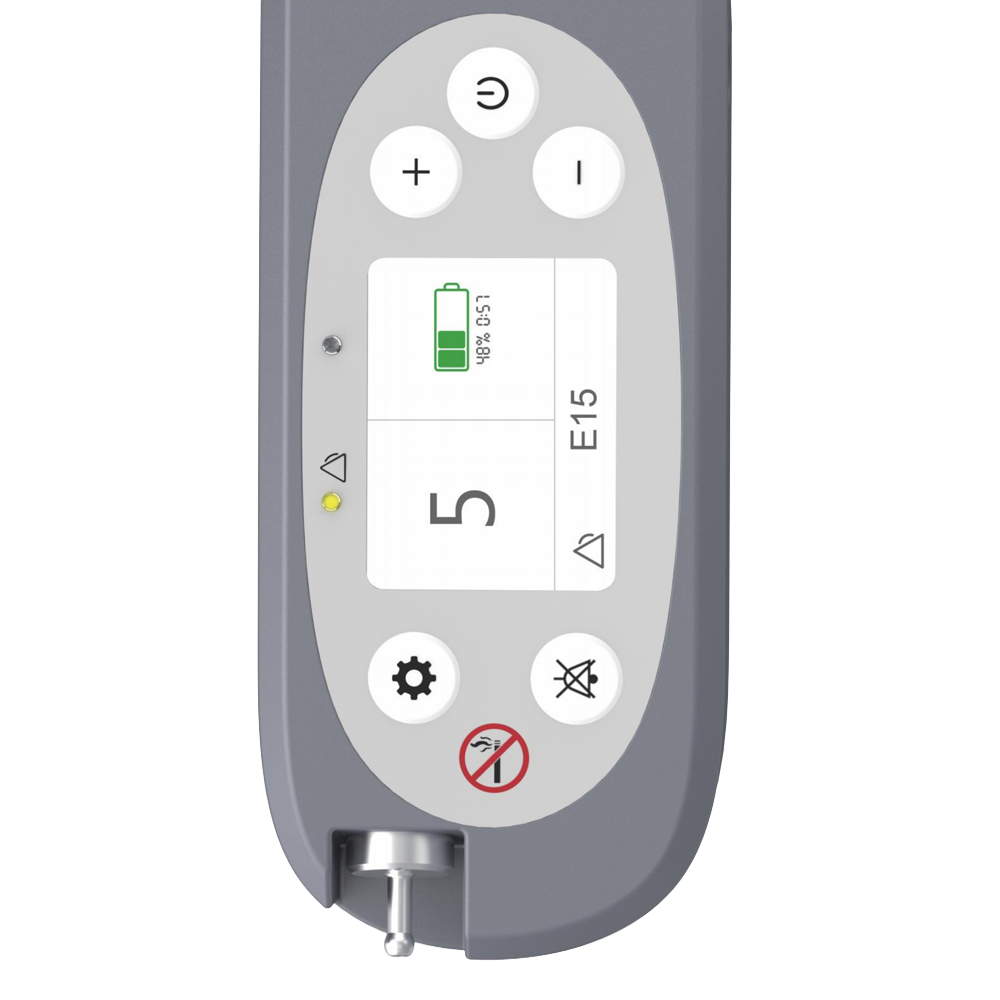
1 to 5
Pulse flow settings
Oxygen concentration is held at 90% (-3% / +6%) at every setting, not only at the low end. Five steps give your clinician room to adjust as your needs change, without moving you onto a different machine.
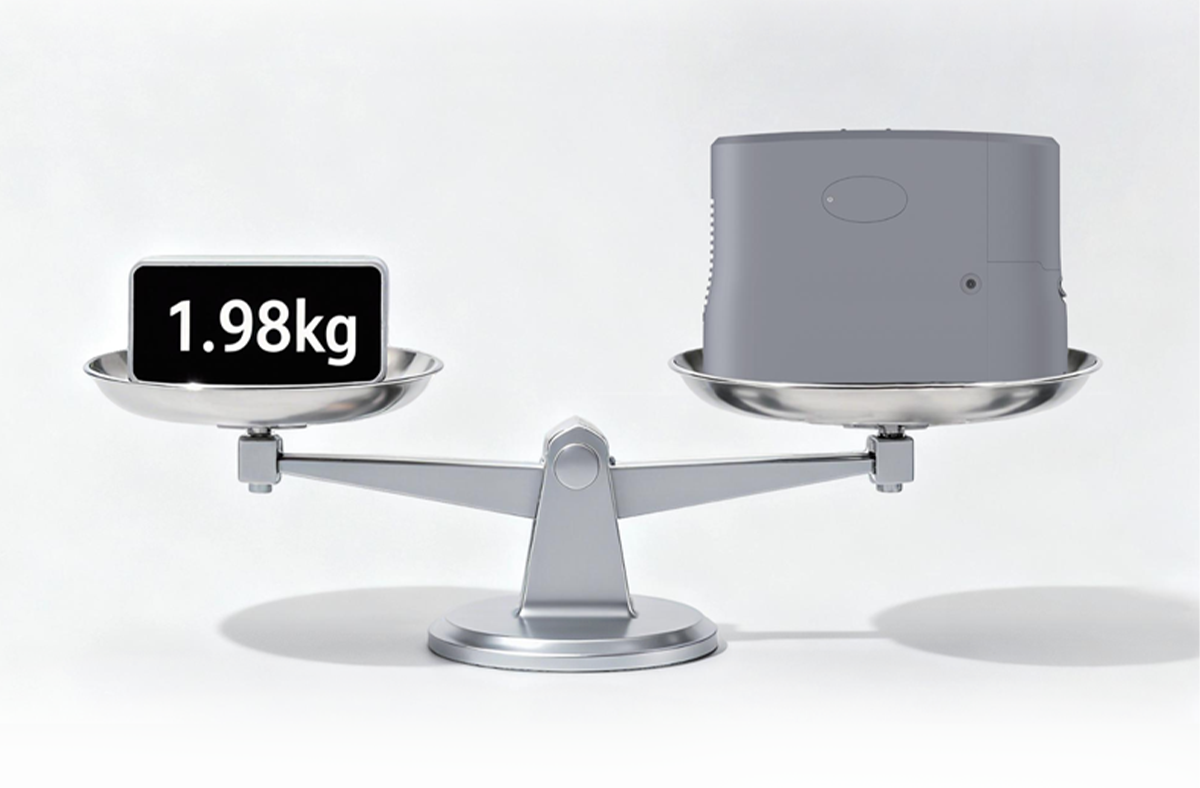
1.98 kg
With the battery fitted
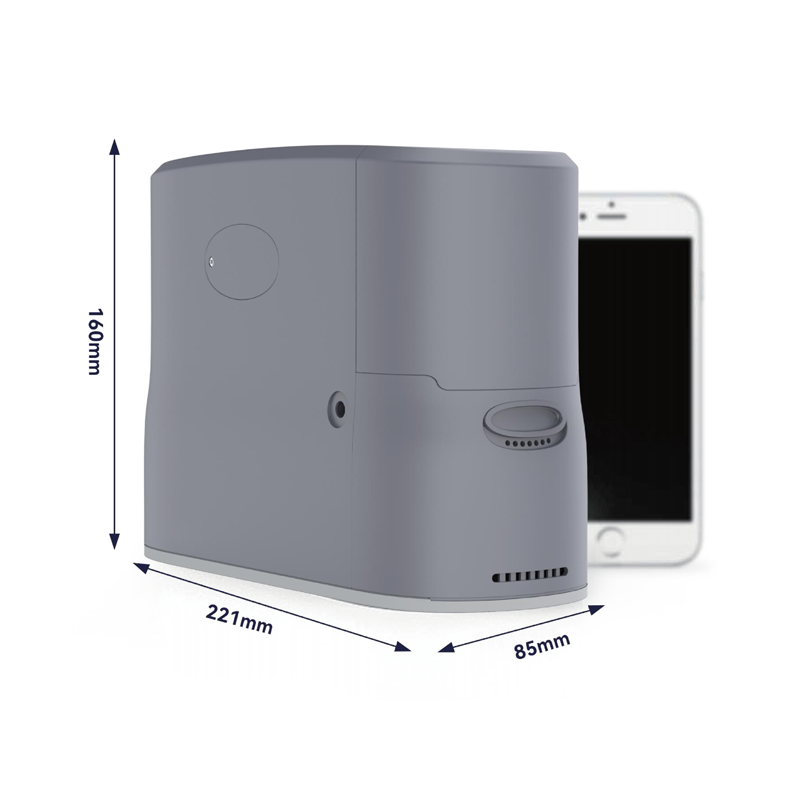
22.1 x 8.5 x 16 cm, which Kingon describe as the closest thing to a pocket sized concentrator. Carried on a shoulder strap rather than wheeled, which is usually what decides whether a device leaves the house.
37 dB(A)
Measured on setting 2
Between a whisper and a quiet office. Quiet enough to sit beside you in a waiting room, a car or a shared lounge room without turning heads.
Up to 5 years
Device warranty
Three years as standard, plus two more free when you register the device with Kingon within 14 days of purchase. Battery and sieve bed carry 12 months each.
Before you head out
Runtime is published per battery, from 5 hours on setting 1 down to 1 hour 42 minutes on setting 5. Work out your setting, check the row, and you know before you leave whether the outing fits on a charge.
Two batteries are supplied with every unit and swap over in seconds, so the practical figure is roughly double the row you need. Recharging takes under 4 hours from either the mains supply or the car charger.
Actual runtime varies with breathing rate, battery age and temperature. For flights and long outings, plan conservatively and carry backup power.
Battery, car and mains
A backup oxygen supply is recommended for power outages or mechanical faults. Your clinician should confirm that pulse dose and your prescribed setting suit the trip, including at altitude.
Reading the screen
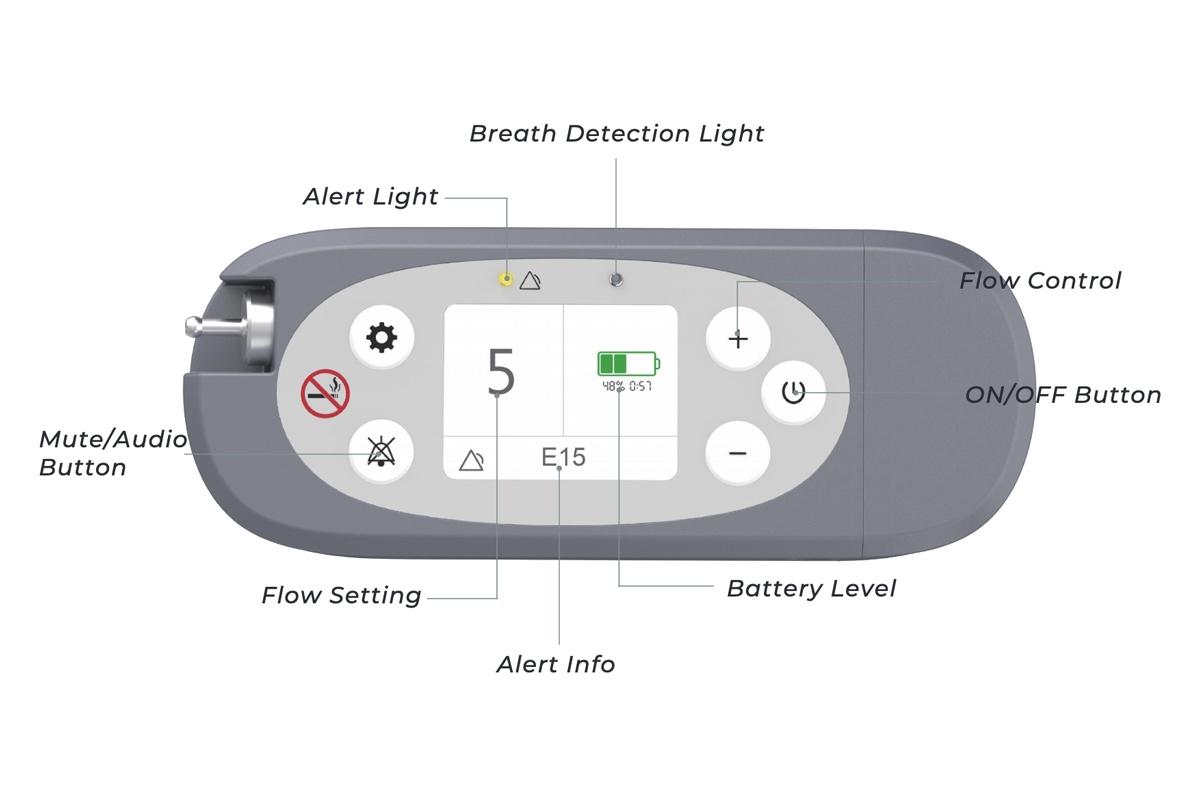
Low battery, low oxygen concentration and no breath detected can all be muted, but they stay on the 2.8 inch backlit screen. A carer checking from across the room can still see what the device is telling you.
The display is sized for impaired vision, with the flow setting shown large and the battery percentage alongside it.
Living with it
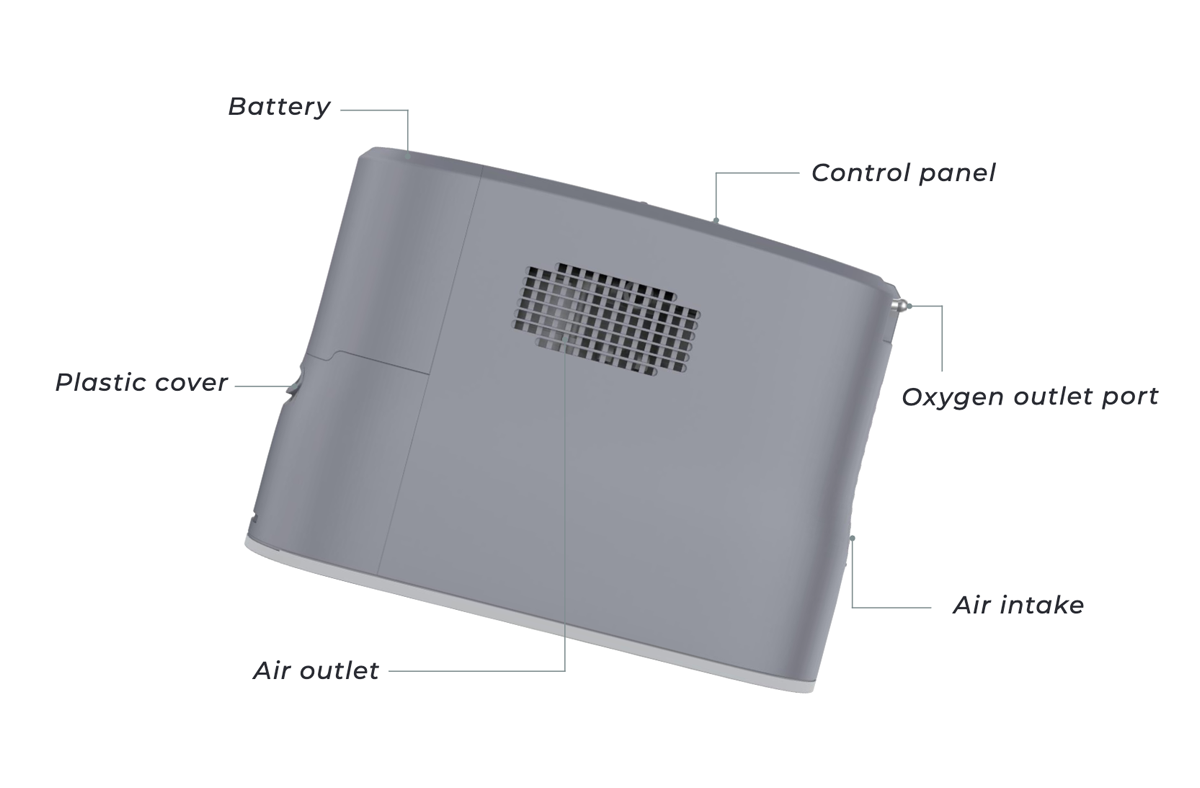
The hard plastic mesh filter lifts out and washes in mild detergent and water. The cotton air filters are swapped when they look dirty, and five spares come in the box.
The oxygen sieve bed is replaced every 12 to 18 months depending on use. The screen tells you when, and the modular sieve design makes it a quick job for a service agent rather than a return to the manufacturer.
Servicing and advice come from our own team here in Australia, on 1300 881 824.
Unpacking
Flow settings are not litres per minute. Setting 2 does not mean 2 L/min. Your oxygen levels should be checked with an oximeter across different activity levels so your clinician can confirm the right setting for you.
Pulse dose devices are not recommended for use while sleeping, as they may not detect shallow breathing. This device is not intended to be life supporting. Oxygen therapy should only be used as prescribed by a physician or healthcare professional.
A cylinder holds a fixed volume and runs out, so the day gets planned around refills and deliveries. A concentrator makes oxygen from the air in the room and only stops when the power does. Cylinders and continuous flow machines also keep releasing oxygen while you breathe out, and Kingon cite research putting that waste as high as 80%. Pulse dose delivers only at the front of each breath, which is how a device you carry on a shoulder strap does the work of something you would otherwise wheel.
No. It delivers pulse dose oxygen, released when it senses you starting to inhale, across settings 1 to 5. If your prescription calls for continuous flow, a stationary concentrator is the right device instead. Ask your clinician which one applies to you.
The manufacturer states in the user manual that the device conforms to all applicable FAA requirements for carriage and use on board aircraft. Australian airlines then apply their own process on top of that. Qantas keeps a list of accepted medical devices and requires an approved Travel Clearance Form, submitted at least five days before you fly, and without it you can be denied boarding. Virgin Australia requires a medical clearance and asks you to call around five days ahead. Check your device against the airline's own list before you book.
Yes. A DC car power supply is included with the device, for use with a standard vehicle power outlet. Take the AC supply as well so you can recharge at your destination.
The battery recharges while it is installed in the device, connected to the AC supply, and a full recharge takes no more than 4 hours. If you are planning to run the unit continuously from mains or car power for a long stretch, give us a call first and we will confirm the arrangement for your model.
About 5 hours on setting 1, down to 1 hour 42 minutes on setting 5. Real runtime moves with your breathing rate, the age of the battery and the temperature, so plan conservatively for long outings and carry backup power. The manual also recommends keeping a backup oxygen supply for power outages or faults.
Pulse dose devices are not recommended for use while sleeping, because they may not reliably detect shallow breathing. If you need oxygen overnight, ask your clinician whether a continuous flow device suits you better.
No. The manual specifies the device is used with a single lumen nasal cannula, and pulse dose delivery depends on it sensing your breath through that cannula. A mask breaks the trigger.
The manual states the device is used on a prescriptive basis and is restricted to sale by or on the order of a physician in many countries. Speak with your doctor or respiratory clinician first, and have them confirm both that pulse dose suits you and which setting to use.
Kingon cover the device for three years as standard and add two more at no cost if you register the device within 14 days of purchase, taking it to five years in total. The battery and the oxygen sieve are covered for 12 months each. Registration applies to new units only, the manufacturer warranty is not transferable, and it covers defects rather than accidental damage, misuse or transit damage.
Very little. Kingon list the hard plastic mesh filter as removable and washable in mild detergent and water, and the cotton air filters as replaceable when dirty. The oxygen sieve bed is replaced every 12 to 18 months depending on use, the screen tells you when, and it is a job for a service agent rather than a return to the manufacturer.
It does not simply stop. If no breath is sensed through the cannula, the P2-E pulses oxygen automatically about once every three seconds, and resumes delivering in time with your breathing as soon as it picks you up again.
Includes the Kingon P2-E Portable Oxygen Concentrator, carry bag, AC power supply, DC power supply, 5x intake filters, and a rechargeable lithium-ion battery.
Adults prescribed supplemental oxygen therapy for use at home, outdoors, or while travelling.
When a physician or healthcare professional has prescribed supplemental oxygen for daily use, travel, or time away from mains power.
Estimated shipping times are as below
Metropolitan Area
Brisbane, Gold Coast, Sydney, Melbourne
Express: 1-2 Business Days
Standard: 2-5 Business Days
Adelaide
Express: 1-2 Business Days
Standard: 3-6 Business Days
Regional Area
Queensland, New South Wales, ACT, Victoria, South Australia
Express: 1-3 Business Days
Standard: 2-8 Business Days
Western Australia*
Express: 3-4 Business Days
Standard: 3-7 Business Days
Northern Territory
Express: 3-4 Business Days
Standard: 3-7 Business Days
Tasmania
Express: 1-3 Business Days
Standard: 3-8 Business Days
**The above days are only to be used as a guide, and not a guarantee.**
Free Express shipping
Free express shipping is offered for all orders over $250 where the estimated freight cost is $45 or less.
When completing your order at the checkout you will need to enter a valid shipping address. Once added you will have the option to select your preferred shipping option. The 'Free' pricing will be displayed for the applicable options. Please select your option and complete your order.
The Free Express Shipping offer is only available for orders placed through our website and will not be honoured for orders placed with us through other channels.
Shipping & Dispatch Notice
We aim to dispatch most orders within 1–2 business days. However, due to the specialised nature of some items with assembly and packaging requirements, additional time may be required for thorough quality control (QC) checks prior to dispatch.
We appreciate your patience as we work to ensure your order arrives safely and meets our high quality standards.
Please read full terms and conditions of sales here.
This section is only relevant to products with Lithium batteries included. If the product above does not include a lithium battery, please ignore this section as it's universal across our website.
TRAVELING WITH A OXYGEN CONCENTRATOR
The FAA allows these devices on board most aircrafts. If they have a FAA approval, they should allow the oxygen concentrator on board with the supply of the MSDS document.
IMPORTANT:It is the responsibility of the patient to check with the specific airline carrier when traveling domestically and internationally. We strongly advise to check the airline website or contact them directly around what they specifically require to allow you to travel onboard with this device to avoid any issues or delays in your travel.
Just because a oxygen concentrator is FAA approved, does not automatically mean a customer will be allowed to take the machine on the plane. It is up to the discretion of every flight, airline, airline pilot etc if the machines or batteries are allowed to be carried on board.
When traveling with the device, be sure to bring the AC Power Supply and the External Battery Charger (if you have one) with you. It is advisable to use external power (i.e., plugged into a wall) whenever it is available to keep the battery fully charged. Bring enough charged batteries with you to power your concentrator for no less than 150% of the expected duration of your flight, ground time before and after the flight, security screenings, connections and a conservative estimate for unanticipated delays. Note that per FAA regulations, all extra batteries are to be individually wrapped and protected to prevent short circuits and carried in carry-on baggage onboard aircraft only. The AC Power Supply cannot be used to charge the device battery when onboard aircraft. If traveling by bus, train or boat, contact your carrier to find out about power port availability.


